
In quantum computing, traditional microprocessors are not used in the same way as in classical computing. Instead, quantum computers rely on quantum bits or qubits to perform computations. Qubits represent the fundamental unit of quantum information and are manipulated according to the principles of quantum mechanics.
However, classical microprocessors are still used in conjunction with quantum computers for tasks such as controlling and interfacing with the quantum hardware, running classical algorithms that support quantum computations, and processing input and output data. These classical processors help manage the overall operation of the quantum system and facilitate the integration of quantum computing into existing computational workflows.
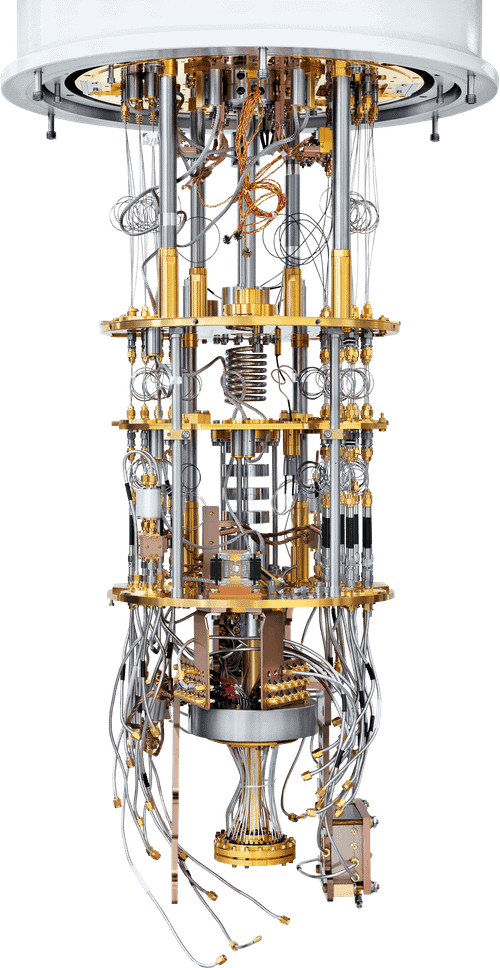
There isn’t a direct equivalent of traditional microprocessor manufacturing companies in the quantum computing realm. Quantum computing relies on entirely different principles and hardware architectures compared to classical computing.
For example, companies like IBM, Google, Rigetti, D-Wave, and IonQ are leading the development of quantum hardware and technologies. They focus on creating and refining the qubits and control systems necessary for quantum computation, rather than manufacturing traditional microprocessors.
That said, as quantum computing continues to evolve, there may be new players or existing semiconductor manufacturers that pivot to produce components for quantum computers. However, the field is still relatively young, and the manufacturing landscape may change over time.
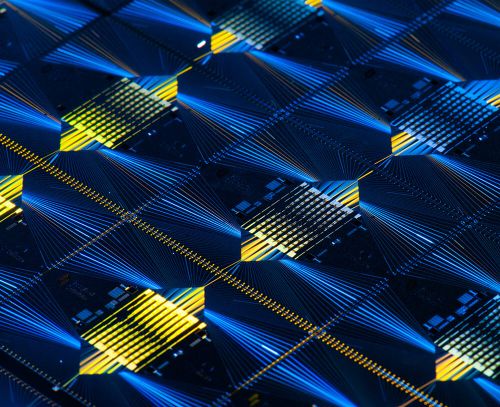
Quantum computing hardware typically includes components such as:
- Qubits: These are the quantum analogs of classical bits used in traditional computing. Qubits can exist in multiple states simultaneously thanks to superposition and entanglement, which are fundamental quantum principles.
- Control Systems: Quantum computers require precise control systems to manipulate and measure qubits. These systems ensure that quantum operations are executed accurately and efficiently.
- Cryogenic Systems: Many quantum computers operate at extremely low temperatures, typically close to absolute zero, to reduce decoherence and maintain the delicate quantum states of qubits. Cryogenic systems help achieve and maintain these low temperatures.
- Quantum Interconnects: These are the pathways that allow qubits to communicate and interact with each other. They are essential for implementing quantum gates and enabling quantum algorithms.
- Classical Computing Components: While not part of the quantum hardware itself, classical computing components such as classical processors, memory, and input/output interfaces are used to control and interact with the quantum hardware, run classical algorithms, and process data.
Companies like IBM, Google, Rigetti, IonQ, and D-Wave are at the forefront of developing and refining quantum hardware technologies. Each company employs different approaches and architectures for building quantum computers, such as superconducting qubits, trapped ions, or quantum annealing.
 MyFoodwallaTechnology