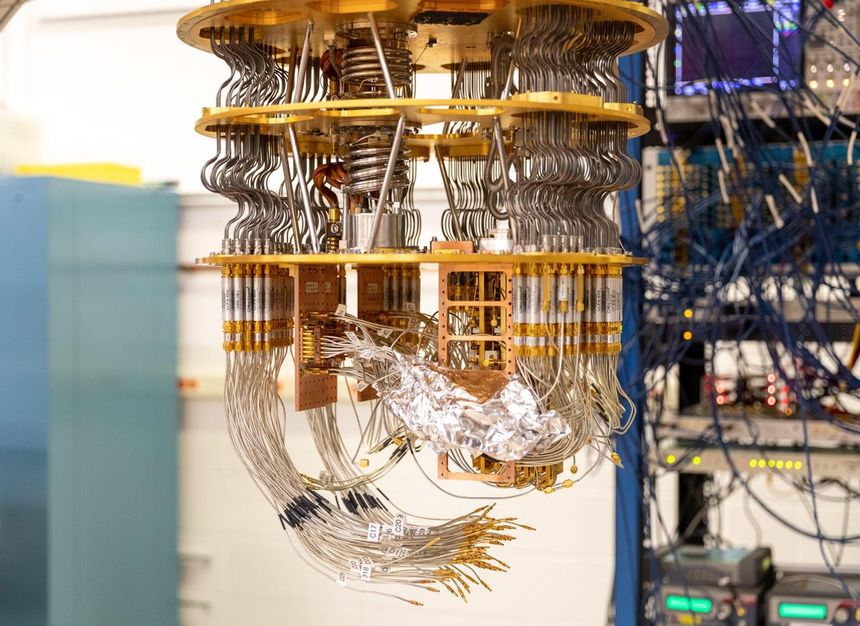
Quantum computing and quantum technologies have the potential to significantly impact cybersecurity in both positive and negative ways. Here are some potential applications and implications of quantum-powered technology for cybersecurity:
- Quantum cryptography: Quantum mechanics principles like quantum entanglement and quantum superposition can be leveraged to develop unconditionally secure communication channels. Quantum key distribution (QKD) protocols allow two parties to exchange encryption keys in a way that is fundamentally secure against eavesdropping or tampering due to the laws of quantum physics.
- Quantum random number generation: True random number generation is crucial for many cryptographic applications. Quantum random number generators (QRNGs) exploit quantum processes to generate unpredictable and unbiased random numbers, which are essential for secure encryption and authentication.
- Quantum algorithms for cryptanalysis: While quantum computing could enable unbreakable encryption through quantum cryptography, it also poses a significant threat to current classical cryptographic systems. Quantum algorithms like Shor’s algorithm and Grover’s algorithm could potentially break widely used public-key cryptography schemes, such as RSA and elliptic curve cryptography, rendering them insecure.
- Post-quantum cryptography: To address the potential vulnerability of classical cryptosystems to quantum attacks, researchers are actively developing post-quantum cryptographic algorithms that are believed to be secure against both classical and quantum attacks. These include lattice-based, code-based, hash-based, and multivariate cryptographic schemes.
- Quantum machine learning for cybersecurity: Quantum computers could potentially enhance machine learning algorithms used for detecting and preventing cyber threats. Quantum algorithms for pattern recognition, anomaly detection, and data analysis could improve the accuracy and efficiency of cybersecurity systems.
- Quantum sensor technology: Quantum sensors based on principles like quantum entanglement and quantum interference could potentially be used for advanced monitoring and detection of cyber-physical threats, such as side-channel attacks or electromagnetic emanations.
While quantum technologies offer promising applications for enhanced cybersecurity, they also introduce new challenges and risks. Proper implementation, standardization, and risk management strategies will be crucial as these technologies continue to develop and become more widely adopted.
 MyFoodwallaTechnology