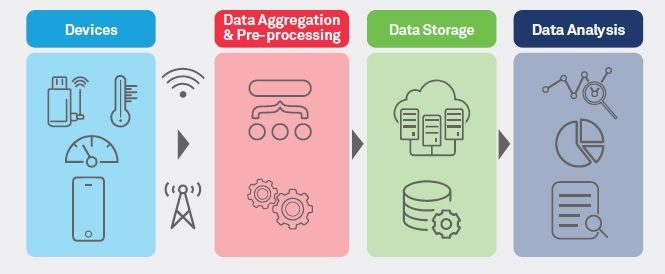
The integration of Internet of Things (IoT) devices and software has revolutionized the field of biotechnology, enabling more efficient data collection, remote monitoring, and automation of various processes. Here are some key applications and benefits of IoT in biotechnology:
- Biosensors and Wearable Devices:
- Wearable biosensors can monitor vital signs, blood glucose levels, and other biometric data, enabling real-time monitoring of patients or research subjects.
- These devices can transmit data wirelessly to healthcare providers or researchers, facilitating remote monitoring and personalized treatment.
- Environmental Monitoring:
- IoT sensors can monitor various environmental conditions, such as temperature, humidity, light intensity, and air quality, which are crucial for maintaining optimal conditions in biotechnology facilities, such as laboratories, fermentation tanks, or greenhouses.
- These sensors can provide real-time data and trigger automated responses, like adjusting environmental controls, to maintain desired conditions.
- Asset Tracking and Inventory Management:
- RFID (Radio Frequency Identification) tags and other IoT devices can track the location and movement of equipment, supplies, and samples within biotechnology facilities.
- This helps streamline inventory management, reduce loss, and ensure proper handling and storage of sensitive materials.
- Process Automation and Control:
- IoT devices can automate and control various processes in biotechnology, such as fermentation, cell culture, or chemical synthesis.
- Sensors can monitor critical parameters, and actuators can adjust conditions or initiate specific actions based on predefined algorithms or machine learning models.
- Data Collection and Analysis:
- IoT devices can collect large amounts of data from various sources, including biosensors, environmental sensors, and process monitoring systems.
- This data can be analyzed using advanced analytics and machine learning techniques to gain insights, optimize processes, and enable data-driven decision-making.
Software plays a crucial role in integrating and managing IoT devices in biotechnology. Some examples include:
- IoT Platforms and Cloud Services:
- IoT platforms like Amazon Web Services (AWS) IoT, Microsoft Azure IoT Hub, or Google Cloud IoT Core provide infrastructure and services for connecting, managing, and securing IoT devices.
- These platforms facilitate data ingestion, processing, and analysis, as well as device management and remote updates.
- Data Analytics and Visualization Tools:
- Software tools like Tableau, Power BI, or custom-built applications can help visualize and analyze the data collected from IoT devices.
- These tools can provide insights, generate reports, and support decision-making processes.
- Automation and Control Software:
- Process automation software, such as SCADA (Supervisory Control and Data Acquisition) systems or DCS (Distributed Control Systems), can integrate with IoT devices to automate and control biotechnology processes.
- These software systems can execute predefined logic or leverage machine learning algorithms to optimize processes based on real-time data.
- Device Management and Security Software:
- Software solutions are needed to manage and secure the increasing number of IoT devices in biotechnology facilities.
- These solutions can handle device provisioning, firmware updates, access control, and cybersecurity measures to protect sensitive data and systems.
Overall, the integration of IoT devices and software in biotechnology enables more efficient operations, better monitoring and control, data-driven decision-making, and the potential for innovative discoveries and breakthroughs in areas such as drug development, bioprocessing, and personalized medicine.
 MyFoodwallaTechnology